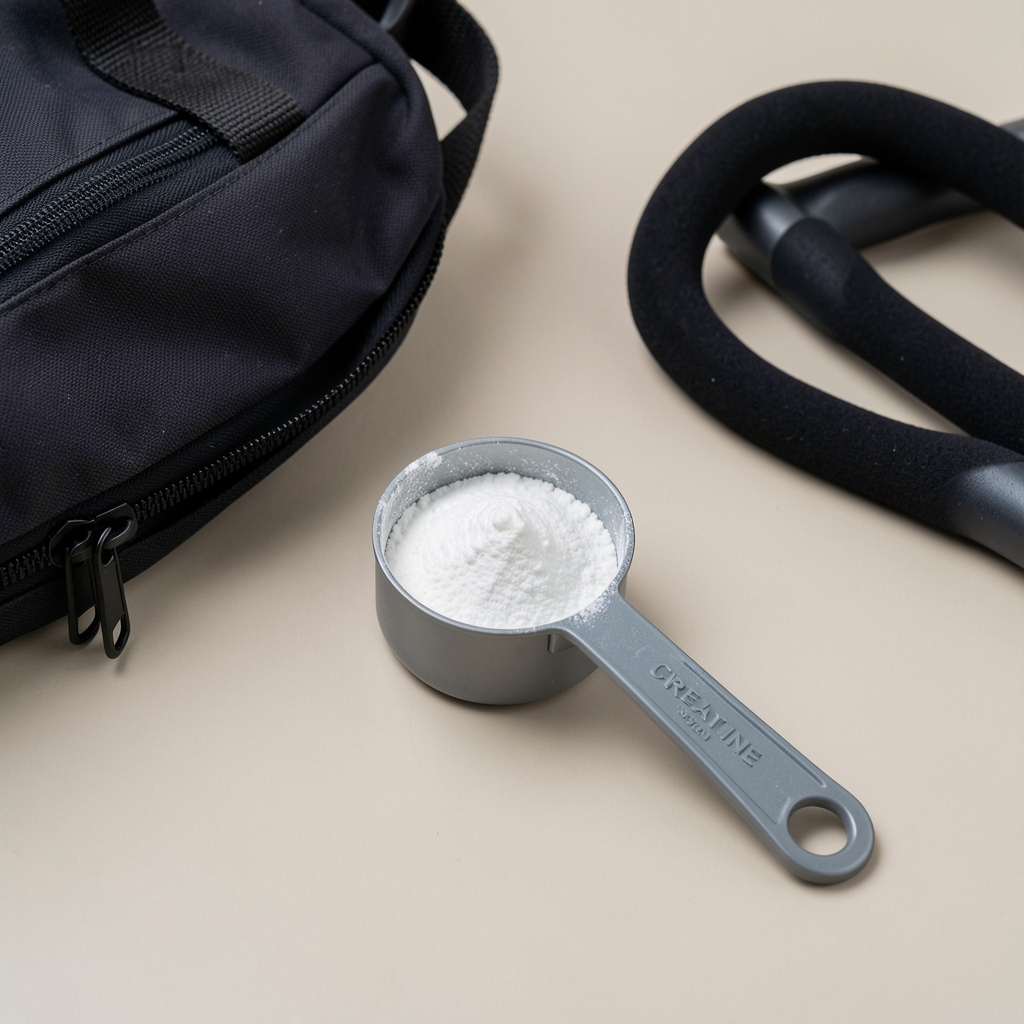
Among the more quietly consistent observations in men's nutritional research is the relationship between two categories of micronutrients — zinc and the B vitamin family — and the daily patterns that active men describe as focus, endurance, and reliable energy. This editorial examines what published research says, and what it does not.
The Role of Zinc in an Active Man's Routine
Zinc is one of the more frequently discussed minerals in men's supplement stacks, and for reasons that are largely grounded in published nutritional science. The mineral contributes to nutritional balance in active men's routines, appearing consistently in dietary analyses of men engaged in resistance training and endurance sport. The logic is straightforward enough: physical activity, particularly sustained or high-intensity exercise, increases zinc losses through sweat and metabolic demand.
What matters for the practical question — whether to supplement — is the starting point. Dietary intake from whole foods like red meat, shellfish, legumes, and seeds covers zinc requirements for many men without supplementation. The editorial position here is consistent with the broader principle: supplement as addition, not replacement. Where dietary zinc falls short — and it often does in men following calorie-restricted or plant-forward patterns — a daily supplement in the range studied by published research becomes a considered choice rather than a default one.
Published nutritional reviews document zinc's contribution to normal nutritional balance across a range of physiological functions. For the purposes of an everyday supplement stack, the point of interest is how zinc interacts with energy metabolism and physical recovery — two domains directly relevant to active men's daily routines. The observation, drawn from population-level nutritional surveys, is that zinc insufficiency correlates with self-reported fatigue patterns in active men aged 25-45. Whether that correlation holds individually depends on dietary context.
"The supplement question, in zinc's case, begins not with the product but with the plate."
B Vitamins: A Family of Functional Distinctions
The B vitamin family is not a single entity. Eight chemically distinct compounds share the grouping — thiamine (B1), riboflavin (B2), niacin (B3), pantothenic acid (B5), pyridoxine (B6), biotin (B7), folate (B9), and cobalamin (B12). Each contributes to daily focus and energy awareness through different metabolic pathways, and the distinctions matter when evaluating a supplement label.
B vitamins are water-soluble, which means they are not stored in the body in meaningful quantities. The practical implication is that regular dietary intake — or consistent supplementation — is required to maintain nutritional balance. For active men following a well-varied omnivorous diet, deficiency is uncommon. For men following restricted dietary patterns, travelling frequently with inconsistent food access, or in calorie deficits for body composition reasons, the case for a B complex supplement becomes more straightforward.
B12 and B6 receive particular attention in men's supplement literature, partly because of their roles in energy-yielding metabolism and partly because they are among the more commonly evaluated in published nutritional surveys. The editorial observation here is that B12 insufficiency, while rare in men who eat animal products regularly, appears in a measurable proportion of men aged 40 and above — a demographic increasingly represented in active lifestyle communities.
Stacking Zinc and B Vitamins: Practical Observations
In men's supplement stacking conversations, zinc and a B complex are frequently paired. The rationale is pragmatic: both address micronutrient gaps that physical activity increases, both are well-tolerated at standard supplement doses, and both are available in combined formulations or as separate daily supplements. The evidence base for the combination is not as formally studied as each in isolation, but the individual evidence for each is sufficient to support the pairing from a nutritional perspective.
Timing within a supplement stack is a frequent editorial question. Both zinc and B vitamins are generally taken with food — zinc in particular is more readily absorbed alongside a meal containing protein, and B vitamins avoid the mild nausea that some men report when taking them on an empty stomach. Morning supplementation, alongside breakfast, is the pattern most consistent with the dietary literature on adherence and absorption.
One consideration often underweighted in supplement stack discussions: zinc and iron compete for absorption. Men who include an iron supplement in their stack — a less common but not unusual choice among endurance athletes — should be aware of this interaction and either separate their timing or consult with a qualified nutrition professional about sequencing.

daily serving Ranges in Published Research
The daily serving ranges cited in published nutritional research for zinc supplementation typically sit between 8-25 mg elemental zinc per day for adult men, with 11 mg representing the established reference value for adult male nutritional requirements. Most over-the-counter zinc supplements range from 10-30 mg per serving. The editorial note here is that more is not better — excessive zinc intake over extended periods can interfere with copper absorption, an unintended consequence easily avoided by staying within established reference ranges.
For B vitamins, the dose question is more varied given the eight-compound family. B complex supplements typically provide each B vitamin at levels close to or modestly above reference daily intake values. B12 is an exception where higher doses appear in some formulations — the water-solubility of the compound means excess is excreted, and the absorption efficiency of B12 diminishes at higher intakes, making high-dose formulations a common but not necessarily more effective approach.
The Orenav Journal editorial position on daily serving mirrors its broader editorial principles: the published reference ranges represent the best available consensus, and departing from them without dietary context or professional guidance is a choice with costs that may not be immediately visible. A consistent routine at established nutritional levels outperforms an inconsistent one at elevated doses.
- 01. Zinc contributes to nutritional balance in active men's routines, particularly where dietary variety is limited or sweat losses are significant.
- 02. B vitamins are water-soluble and not stored — consistent daily intake from food or supplementation supports steady nutritional levels.
- 03. The zinc-B complex pairing is a practical stack choice supported by individual evidence for each compound, most effective when taken with food.
- 04. Staying within published reference dose ranges avoids the absorption competition and nutritional imbalance risks associated with excess supplementation.
The Pattern Behind Consistent Energy
The men's wellness literature on energy, focus, and daily performance is not short of product claims. Separating editorial observation from promotional rhetoric requires attention to the origin of the claim — whether it traces to published nutritional research or to marketing positioning. For zinc and B vitamins, the foundation in nutritional science is solid, the individual variation in effect is real, and the expectation of dramatic change from supplementation alone is not supported by the evidence base.
What the evidence does support is the unglamorous but important observation that nutritional gaps undermine the energy and performance patterns that active men are trying to sustain. Zinc and B vitamins, used as part of a considered daily routine alongside adequate dietary variety, sleep, and movement, contribute to the conditions under which consistent performance is achievable. That is a modest but well-supported claim, and it is the kind of claim the Orenav Journal is comfortable making.
The energy patterns that men attribute to their supplement routines are real phenomena — they just rarely trace to a single compound. The habit of taking a daily supplement consistently, eating with intentionality, and attending to recovery creates a nutritional context where individual micronutrients do their best work. Zinc and B vitamins are part of that context. They are not the whole story.